In packaging automation, the difference between equipment and a working production line is integration. A machine may perform well on its own. But when products need to move through multiple systems, at production speed, with precise timing and reliable flow, success depends on how everything works together.
That is the role of a packaging systems integrator. Kraken focuses on packaging line integration-the product handling, controls, and machine-to-machine coordination that connects production equipment with downstream secondary packaging.
What manufacturers need is rarely just another conveyor, transfer, or machine. They need a coordinated packaging system that keeps products moving accurately and reliably from production through end-of-line packaging and inspection.
Integration Is Where Line Performance Is Won or Lost
Most packaging problems are not caused by a single machine. They often show up in the transitions between conveyors and cartoners, accumulation and inspection, upstream production and downstream packaging, and equipment from different suppliers.
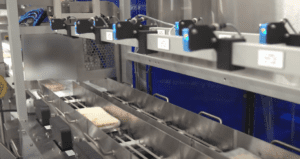
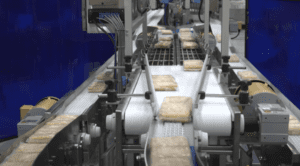
Those transition points are where packaging system integration succeeds or breaks down. Timing slips, product flow becomes inconsistent, operators intervene, and throughput drops. Kraken focuses on solving those system-level challenges. We design solutions around how products actually behave on the line-how they move, transfer, accumulate, orient, route, and enter downstream packaging processes under real production conditions.
Kraken’s Flow Management & Routing capabilities are built around those same transition problems, including merge, divert, lane balancing, accumulation, metering and buffering, and controlled conveyance.
More Than Equipment. Coordinated Performance.
As a packaging systems integrator, Kraken works across the full production environment to coordinate product flow and conveyance, transfer systems, orientation and staging, controls integration and end-to-end machine communication, inspection integration, and downstream packaging coordination.
That may include equipment we design and build ourselves, existing equipment already on the line, or systems from other OEM partners. The goal is never to force a line around one machine. The goal is to create a packaging system that performs reliably as a whole.
For manufacturers evaluating packaging line automation integrators, the important question is not only who can supply a machine. It is who can coordinate new and existing equipment around product spacing and timing, accumulation strategy, conveyor elevations, machine synchronization, controls communication, and recovery from disruptions or downtime events.
Integration is not just connecting equipment mechanically. It is coordinating how the entire system behaves under production conditions. When part of a line does go down, that coordination is what can help keep production moving.
Built Through Real Production Experience
With 30+ years of packaging automation and systems integration experience, Kraken has supported projects for some of the largest cereal manufacturers in the world. Those high-speed environments demand precision, reliability, and consistency at scale. High-speed cereal packaging lines leave very little room for inconsistency in product handling or downstream timing.
That experience shaped how Kraken approaches engineering today. Reliable line performance comes from disciplined integration planning, controls coordination, practical mechanical design, and an understanding of how products behave between machines-not from adding unnecessary complexity.
Working Alongside Other Equipment Providers
Modern packaging lines rarely come from a single supplier. Manufacturers often operate a mix of legacy equipment, new automation, multiple OEM technologies, and evolving production requirements.
Kraken works within those realities. Manufacturers searching for an OEM-neutral packaging integrator are often trying to improve a line without redesigning the entire system around one vendor. Kraken can integrate its own engineered systems, existing customer equipment, or equipment from another OEM partner, with the goal of making the complete line operate as one coordinated solution.
That approach can simplify vendor coordination, improve compatibility between systems, and create clearer accountability across the line. For projects that require both packaging equipment design and integration, Kraken can engineer the handling or flow-control elements while coordinating them with the surrounding machinery.
Frequently Asked Questions
What does a packaging systems integrator do?
A packaging systems integrator coordinates equipment, product handling, controls, and machine communication so multiple parts of a packaging line operate as one system. The work may involve new equipment, existing machinery, custom handling systems, or equipment from multiple OEMs.
What is packaging line integration?
Packaging line integration is the engineering work required to connect production and packaging equipment mechanically and through controls while managing product flow, timing, spacing, accumulation, routing, and recovery conditions between machines.
Can a packaging systems integrator work with equipment from multiple OEMs?
Yes. Kraken can integrate its own engineered systems, existing customer equipment, or equipment supplied by other OEM partners. The objective is coordinated line performance rather than requiring every machine to come from one supplier.
What is packaging line controls integration?
Packaging line controls integration coordinates machine-to-machine communication such as permissives, status signals, speed references, alarms, stops, and recovery logic so upstream and downstream equipment respond predictably as line conditions change.